- BLOG
- History
- Daphne Martina
- 8 minutes reading time
From the Arawaks to Autonomy: A 5-Minute History of Curaçao
Curaçao isn’t just a pretty island with gorgeous beaches and colorful buildings. Every street corner, every architectural detail, every cultural tradition tells a story that spans thousands of years. As someone who’s lived here my whole life, I’ve watched tourists walk through our island seeing only the surface. But once you understand the history underneath, everything changes. The island becomes a living textbook, and suddenly you’re reading a far more complex and fascinating story.
If you want to truly understand Curaçao—the real Curaçao—you need to know where we came from. Let me walk you through our journey from ancient indigenous civilization to the modern, autonomous nation we are today.
Before Columbus: The Arawak Era (1000 CE – 1498)
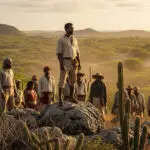
Long before Europeans sailed across the Atlantic, Curaçao was home to the Arawak people, an Amerindian group who arrived on the island around 1000 CE. They called the island “Isla de Curaçao,” and for nearly 500 years, it was genuinely theirs.
The Arawaks were skilled sailors and farmers. They cultivated cassava, hunted fish in our waters, and created tools, pottery, and artwork that revealed a sophisticated understanding of their environment. They had no money, no written language in the European sense, but they had a functioning society that worked for centuries. Archaeologists have found evidence of their settlements, cooking fires, and burial sites across the island.
They lived simply but sustainably, in harmony with the island’s resources. Archaeological digs have revealed that Arawak culture was rich with ceremony, trade routes extending throughout the Caribbean, and genuine craftsmanship. They weren’t primitive—they were perfectly adapted to island life.
This era ended abruptly in 1498 when Columbus sailed past Curaçao. He didn’t land, but his arrival signaled the beginning of the end for the Arawak way of life.
Spanish Colonization and Neglect (1498 – 1634)
When the Spanish claimed Curaçao in the early 1500s, they initially viewed the island as a jumping-off point for larger colonies like Hispaniola (today’s Dominican Republic and Haiti). They weren’t particularly interested in Curaçao itself. The island lacked the gold deposits and dense populations that made other territories profitable.
In their typical fashion, the Spanish enslaved the Arawak population, putting them to work on meager plantations and in salt production. Most Arawaks died within decades from disease, overwork, or violence. Some escaped to other islands. By the early 1600s, the Arawak civilization on Curaçao had effectively disappeared, a tragedy repeated across the Caribbean.
With the Arawak population gone and no immediate wealth to exploit, the Spanish essentially abandoned Curaçao. The island became a relatively quiet backwater, occasionally raided by pirates seeking supplies or shelter. For over a century, Curaçao drifted in colonial limbo.
The Dutch Takeover and the Slave Trade (1634 – 1800)
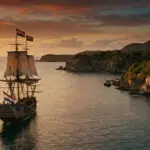
Everything changed in 1634 when the Dutch West India Company, a powerful and aggressive trading firm, captured Curaçao from the Spanish. The Dutch saw something the Spanish had missed: Curaçao’s perfect geographic location as a strategic trading hub.
The Dutch transformed Willemstad into a major port city and, more significantly, a central hub in the Atlantic slave trade. At this point in history, I need to be direct: Curaçao’s prosperity was built on slavery. Dutch merchants and traders were ruthlessly efficient—they bought enslaved Africans and sold them throughout the Caribbean and the Americas. Willemstad became one of the largest slave trading ports in the world.
This is where the story gets dark, and it’s important to acknowledge it fully. Between the 1630s and 1800s, roughly 500,000 enslaved people passed through Curaçao’s ports. Many died on the journey. Others were held in brutal conditions awaiting sale. This wasn’t a footnote to Curaçaoan history—it was the foundation upon which the island’s economy was built.
The enslaved population did not accept their fate quietly — resistance movements like Tula’s 1795 slave revolt challenged the colonial order. For the Europeans and light-skinned colonists, though, it was incredibly profitable. Merchants built grand houses. The port bustled with activity. Trade networks expanded. And underneath it all, the system depended entirely on human exploitation.
During this era, the distinctive architecture of Willemstad developed—the colorful houses you see today were built during this period. The layered, complex demographic makeup of Curaçao also took shape. Enslaved Africans, free Black residents (yes, there were some), European colonists, Jewish merchants escaping persecution in Europe, and others all lived here together in an unequal hierarchy.
Abolitionism and Transition (1800 – 1900)
The early 1800s brought gradual change. Britain abolished the slave trade in 1807, which disrupted Curaçao’s trading dominance. The Netherlands followed with abolition of slavery across its colonies in 1863—one of the last European nations to do so. Curaçao’s economy lost its primary income source.
However, freedom didn’t mean equality. Formerly enslaved people were offered “apprenticeships” that kept them in conditions barely better than slavery. Economic segregation meant that despite freedom, wealth and opportunity remained unevenly distributed along racial lines. Many of the social and economic inequities visible in modern Curaçao have roots in this transition period.
Without the slave trade, Willemstad declined as a major port. The island struggled economically. Some residents left for better opportunities elsewhere. Curaçao became quieter, less prosperous, less central to global commerce. For decades, it felt like the island was fading into obscurity.
Oil Boom and Economic Resurrection (1900 – 1970s)
Then came oil. In the early 1900s, the Dutch discovered massive petroleum reserves in Venezuela, just 40 kilometers south of Curaçao. An oil refinery was established on our island to process Venezuelan crude. This single development transformed Curaçao’s economy overnight.
The oil refinery brought jobs, wealth, infrastructure, and renewed importance to the island. Willemstad bustled again. Schools expanded. Roads were built. Housing development accelerated. For much of the 20th century, the refinery was Curaçao’s largest employer and primary source of government revenue.
During this era, Curaçao developed a middle-class society that was relatively prosperous by Caribbean standards. People who worked at the refinery or in port-related industries could build stable lives. The island attracted workers and businesses from across the region.
But this prosperity came with a caveat: Curaçao was dependent on a single industry controlled by foreign companies. When global oil markets shifted, our economy would be vulnerable. That vulnerability would become apparent later.
Autonomy and Modern Nationhood (1970s – Present)
Curaçao, like other Caribbean colonies, began pushing for self-governance in the 1970s. In 1975, the Netherlands granted independence to Suriname. Curaçao and other Caribbean territories followed with gradual moves toward autonomy.
In 1986, Curaçao gained greater self-governance while remaining in a kingdom structure with the Netherlands, Aruba, Sint Maarten, and Bonaire. Then, in 2010, Curaçao became an autonomous country within the Kingdom of the Netherlands—technically independent in domestic affairs but still maintaining certain ties to the Dutch crown for defense and some foreign policy matters.
This unusual political arrangement is genuinely unique. We’re neither fully independent nor a traditional colonial territory. We have our own constitution, our own government, our own cultural identity — including our unique language, Papiamentu—but we’re not a republic. It reflects the complex modern history of the Caribbean, where many islands are still working out what independence actually means.
The 2000s and 2010s brought economic challenges. The oil refinery downsized significantly after the 1970s and has continued diminishing. Venezuela’s economic crisis devastated trade relationships. The island had to diversify its economy, turning increasingly toward tourism, financial services, and port activities.
Today, Curaçao is a stable, sophisticated Caribbean nation with a remarkable cultural heritage, a thriving tourism industry, and a society that’s proudly multicultural. We’ve transformed from a colonial backwater to a slave trading hub to an oil economy to a modern tourism destination. That’s not a simple journey, and it’s not without complications—but it’s genuinely remarkable.
What This History Means Today
Understanding this timeline transforms how you experience Curaçao. When you walk through Willemstad’s UNESCO heritage architecture — and explore Curaçao’s museums — you’re seeing buildings constructed during the slave trade era—a reminder of both beauty and brutality existing side by side. When you see the Dutch influence everywhere, you understand that it’s been here for nearly 400 years. When you encounter the island’s multicultural population—people with African, Dutch, Jewish, Spanish, Caribbean, and South American heritage all coexisting—you’re seeing the demographic result of centuries of complex history.
The Arawak heritage is honored in small ways—place names, some cultural elements, archaeological sites—but it’s also a tragedy that the indigenous population was essentially erased. The Dutch period brought prosperity and also profound moral horrors. The oil era created stability but also dependency. And our modern era is about finding our identity as an autonomous nation.
This is heavy history. It includes triumph and tragedy, resilience and devastation, beauty and ugliness. That’s what makes Curaçao’s story so compelling and so important to understand.
Step Inside and Experience Our Story
Reading about history is one thing. Experiencing it—walking through the spaces where these events unfolded, seeing artifacts and artworks that bring these stories alive—is something entirely different. The Curaçao Interactive Experience brings this entire narrative to life through immersive installations, interactive exhibits, and multimedia storytelling that makes 500 years of history feel immediate and personal.
From the pre-Columbian Arawak era through Dutch colonization to modern autonomy, CIE walks you through our complete story. You’ll understand not just what happened, but why it shaped us into who we are today.
Visit the Curaçao Interactive Experience and step inside the history that created this remarkable island.
EXCELLENTTrustindex verifies that the original source of the review is Google. My fiance and I traveled to Curaçao from Canada and found the Curaçao Interactive Experience the perfect first stop. We were able to learn about Curaçao’s history, culture, flora & fauna in a fun and interactive way, which made us enjoy and connect with Curaçao even more. I can’t wait to see the other exhibits they have planned, it can only get even better from here. Conveniently located right in town and minutes from the cruse ship terminals I highly recommend!Posted onTrustindex verifies that the original source of the review is Google. Nice museum that in interactive not being way explains history of Curacao Very friendly owner Highly recommendPosted onTrustindex verifies that the original source of the review is Google. Amazing experience! This tour allowed us to capture the essence of the island and understand its rich history and culture. It felt like I toured the entire island during this visit. Highly recommend!Posted onTrustindex verifies that the original source of the review is Google. Worth a visit.. . nicely done and very nice service therePosted onTrustindex verifies that the original source of the review is Google. Had a free morning while my husband wet diving and happened upon this museum. A great overview of the island and it’s rich history- worth the stop!